Learn · Finishing
How to Starch and Shape Crochet Lace
Fresh off the hook, lace looks crumpled: the meshes lean, the edges wave and the picots curl. Blocking puts every mesh in its place, and a little starch keeps it there, flat for a bookmark or a hanging, or curved for a mask. This is how we do it.
The short version
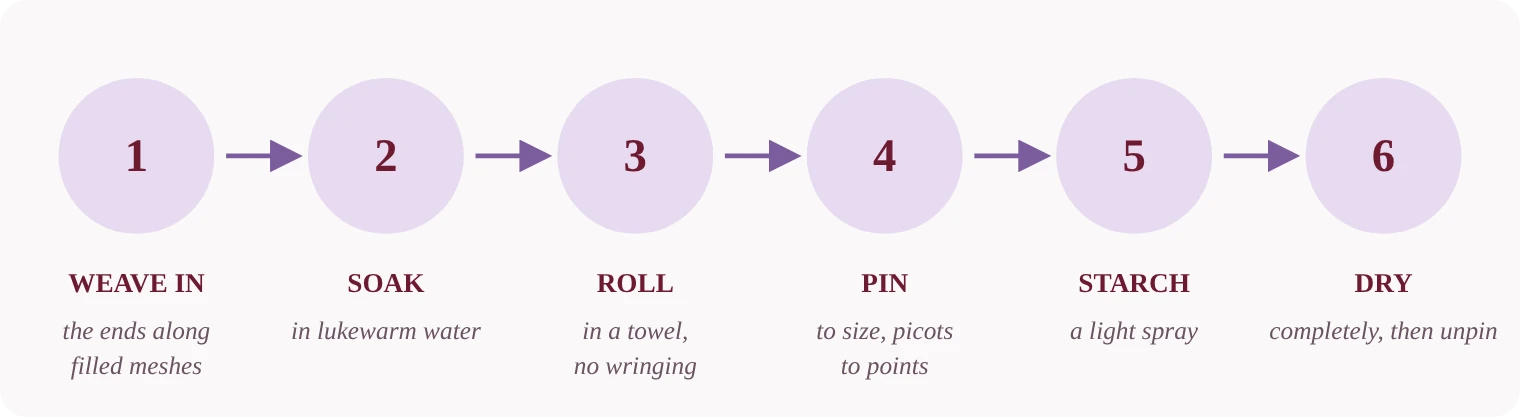
- Weave in the ends along filled meshes.
- Soak the lace, then roll it in a towel; don’t wring it.
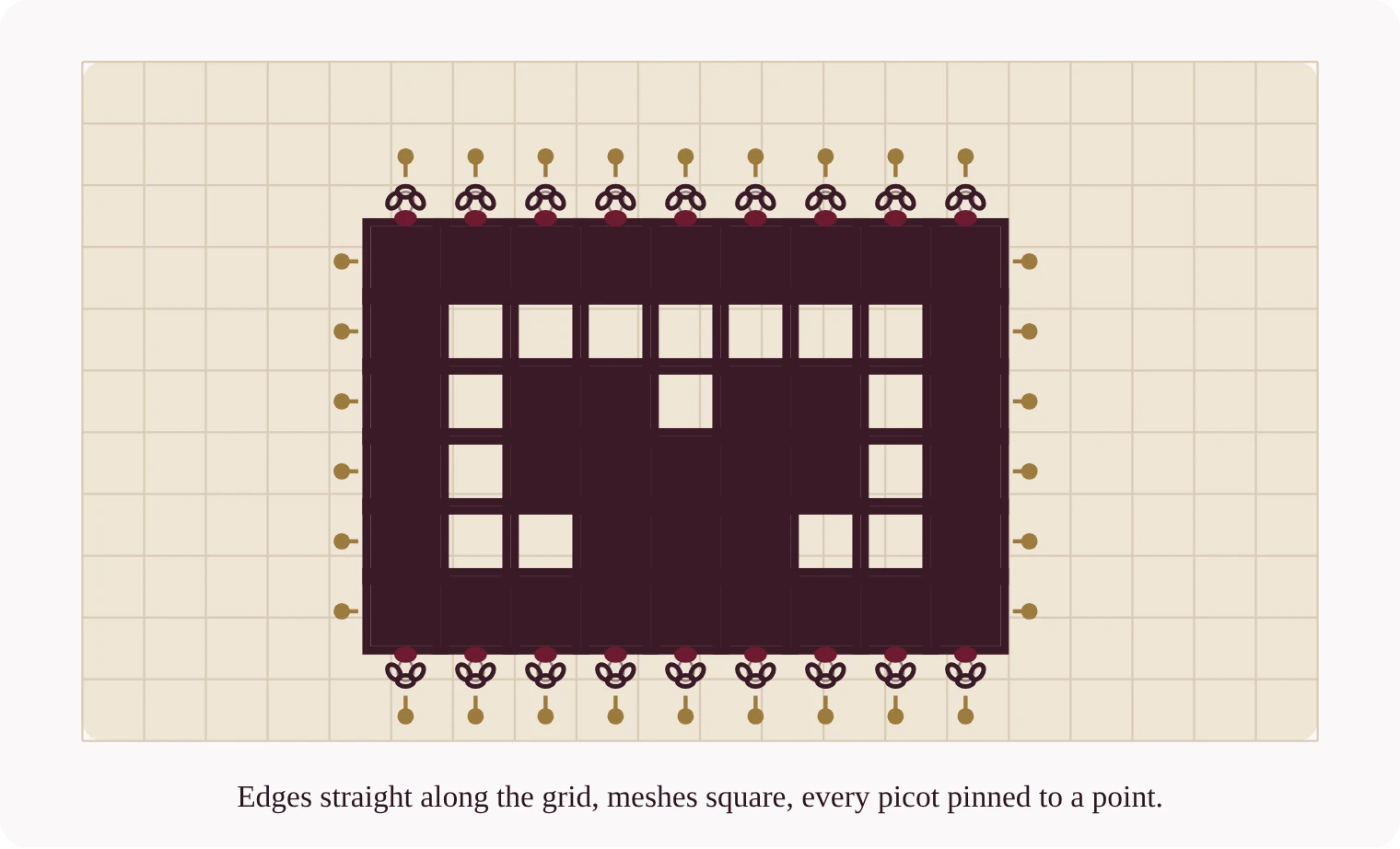
- Pin it out with rustless pins: edges straight, meshes square, every picot to a point.
- For cotton lace, spray it with starch while it is damp; shape masks over a bowl.
- Leave it pinned until it is completely dry.
1What you need
- A tapestry needle, for the ends.
- A towel.
- Rustless pins, so no rust marks appear on the damp lace.
- Something to pin into: a blocking mat, a foam board or a folded towel on a firm surface.
- Spray starch, for cotton thread.
- For 3D shapes: a bowl or a ball about the size of the shape, for a mask the size of a head.
2Weave in the ends
Finish all the crochet first, edgings included. Weave each end into filled meshes, where the extra thread disappears inside the solid blocks; in open meshes it would show.
3Wet the lace
Soak the piece in lukewarm water until it is wet through; for wool or cashmere add a little wool wash. Lift it out without stretching it, lay it on a towel, roll the towel up and press: the towel takes out most of the water. Don’t wring the lace.
4Pin it out flat
Lay the damp lace on your mat and pin it to the size the pattern gives:
- pin the corners first, then the middle of each edge, then fill in between;
- keep the edges straight, with a grid or a ruler to help;
- straighten the meshes so they are square, and any lines or letters upright;
- pin every picot out to a point.
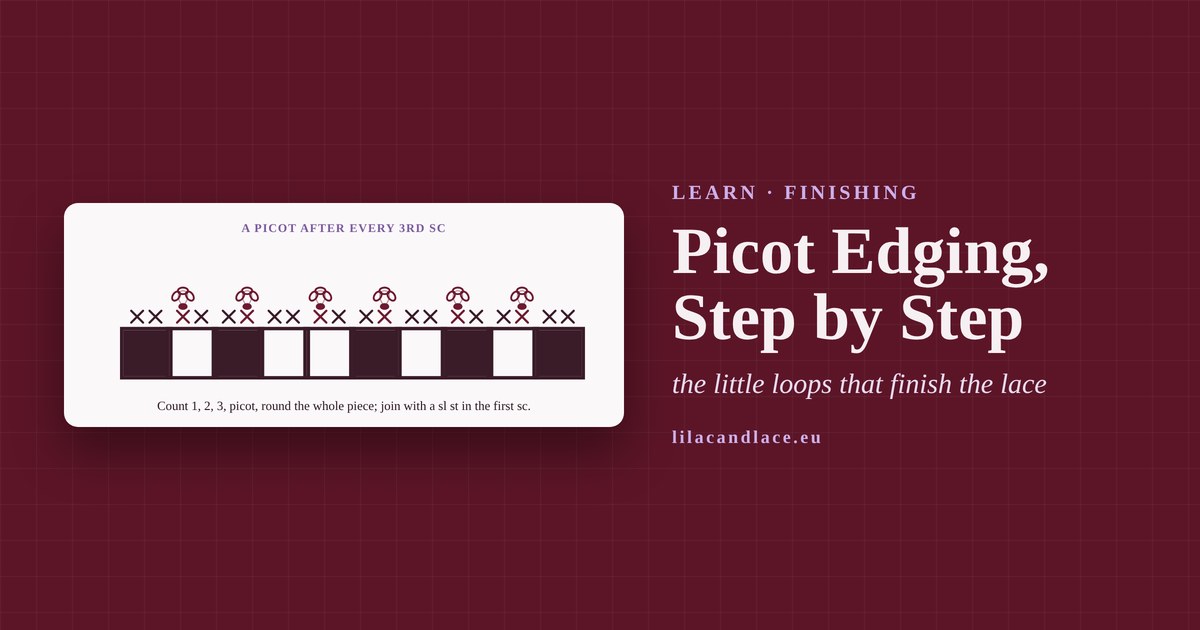
If your piece doesn’t have picots yet, Picot Edging, Step by Step shows how to add them before you block.
5Starch
Starch is for cotton thread lace: bookmarks, hangings, masks. Spray it on while the lace is still damp and pinned, and it dries crisp in exactly that shape; for an extra crisp hanging you can give it one more light spray once it is dry. Wool and cashmere pieces, like gloves and mitts, are only wet-blocked, without starch, so they stay soft.
6Shaping in 3D: over a bowl
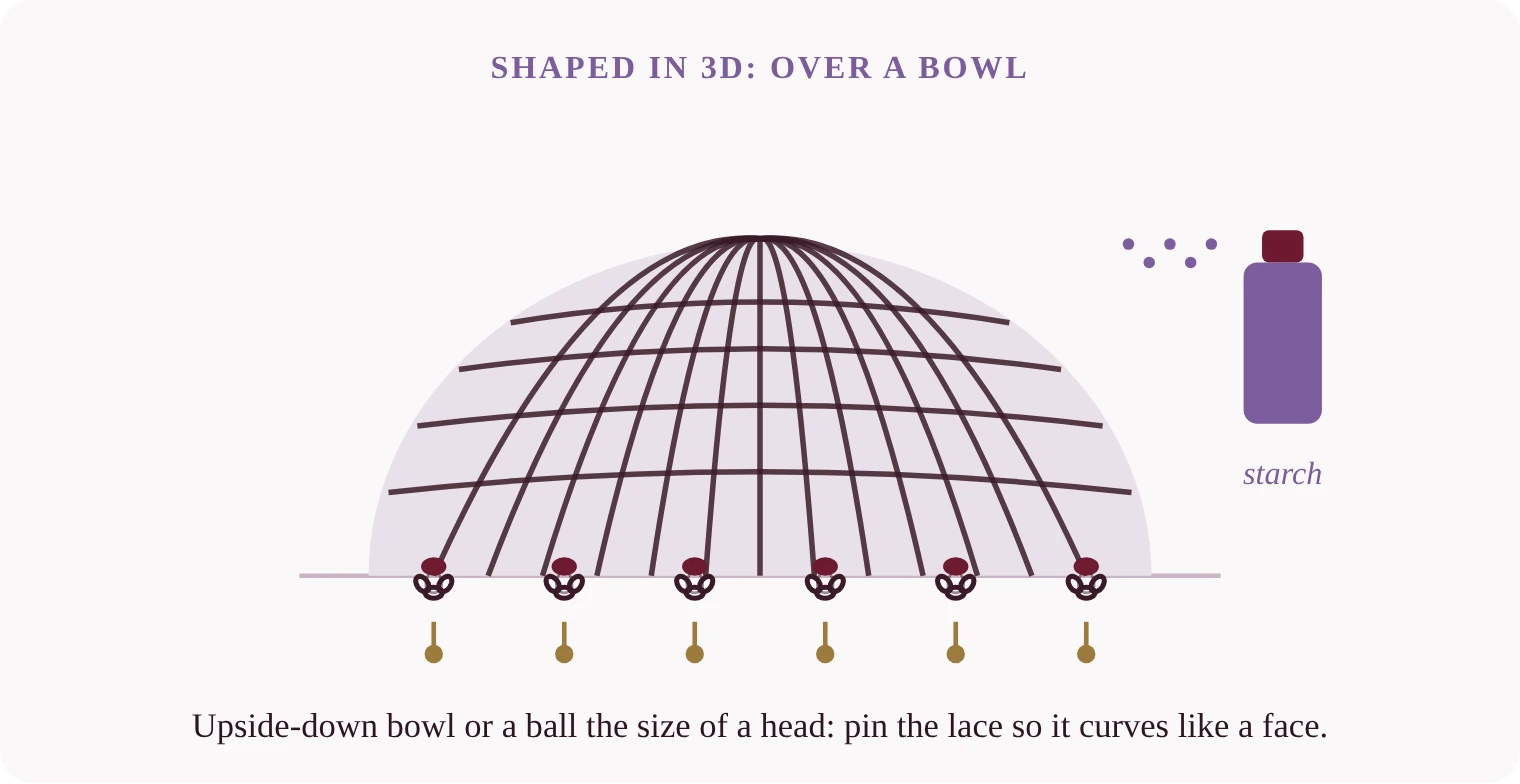
A mask, a little basket or a bell is starched on a form instead of a mat. Turn a bowl upside down, or use a ball, and pin the damp lace over it so it curves the way it should: for a mask, like a face, with the ears or the points standing up and every picot opened out. Spray it with starch and leave it on the form until it is completely dry.
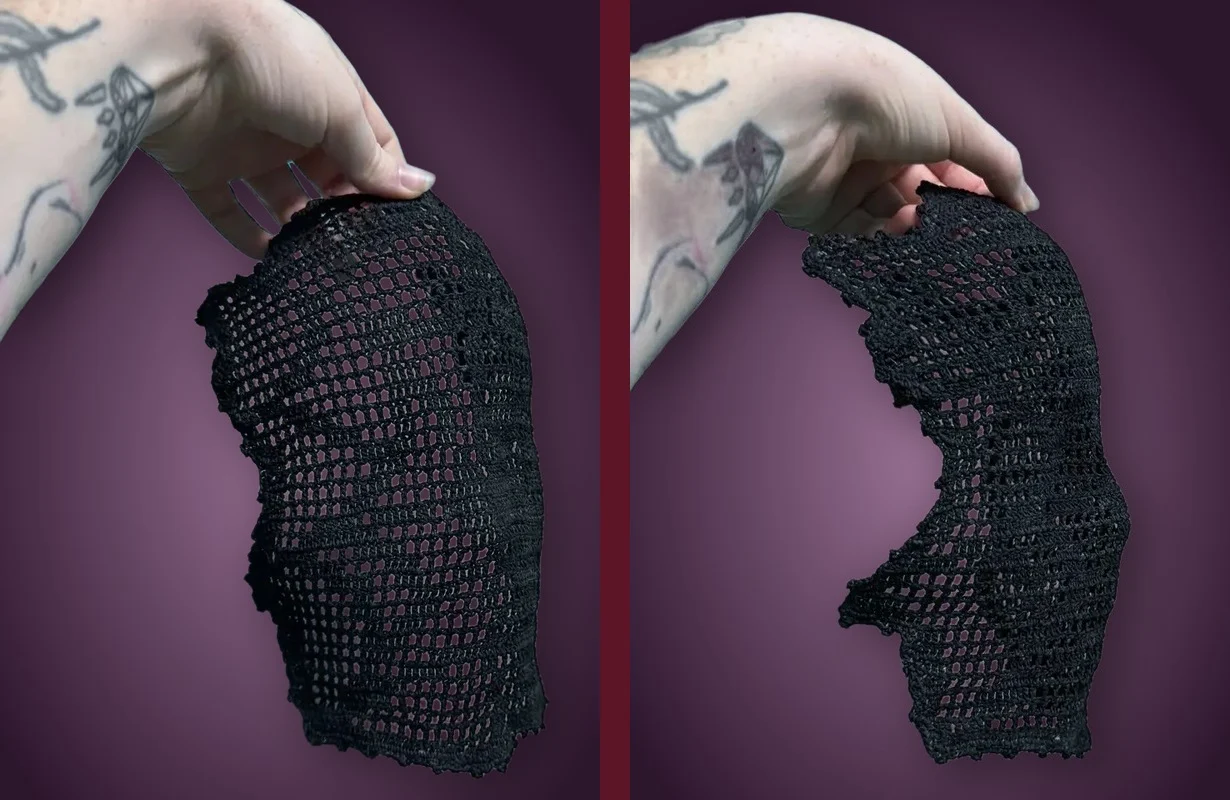
Not every mask has to be shaped. Left soft, it drapes over the face and the ties hold it.
7Small parts
Little three-dimensional details can be shaped by hand. The legs of the spider on our Aranea patterns, for example: dampen them with a little starch and bend each one in the middle, the front pair forwards and the others back, so the spider looks as if it is climbing.
8Let it dry completely
Leave the lace pinned until it is completely dry, all the way through, before you take out a single pin. If you unpin it while it is still damp, the meshes slowly drift back.
9Patterns to block and starch
A flat bookmark, a hanging to pin out square, and a mask to shape in 3D.
Beetle Bookmark
A stag beetle under a star and a crescent moon, framed by a filled border. A quick project for one evening, and a good first taste of filet crochet.
Epitaphs · I am no bird
A gothic window, an openwork bird and an open cage under Charlotte Brontë’s defiant line.
Aranea · Spooky mask
A spider web across the whole face, with no eye holes: you look out through the lace. Bookmark included.
10Questions
Do I have to block filet crochet?
It makes a big difference: blocking evens out the meshes, straightens the edges and opens the picots, so the picture in the lace reads clearly.
Can I starch wool?
We starch only cotton thread lace. Wool and cashmere pieces, like gloves and mitts, are wet-blocked and pinned, without starch, so they stay soft.
Which pins should I use?
Rustless pins. Ordinary pins can leave rust marks on damp lace.
How long does the lace need to dry?
Until it is completely dry all the way through, often overnight. Unpin it too early and the meshes drift back.
Does a mask have to be starched?
No. Starched over a bowl it keeps the shape of a face on its own; left soft it drapes over the face and the ties hold it.